id.mybelitungtrip.com – Close your eyes and think of Indonesia. You probably see the rice terraces of Bali, the komodo dragons of Flores, or perhaps the majestic granite boulders of Belitong Island. Now, keep them closed and listen. What do you hear? The gentle lap of turquoise waves?
Open your eyes. If you are standing in the heart of a Belitung Island tour, and you’ve chosen to go beyond the boulders, the sound isn’t gentle. It’s a rhythmic, hypnotic thumping of ancient gongs and drums, punctuated by the sharp crack of rattan against human skin and a ferocious roar from the crowd.
Welcome to Beripat Beregong, the ancient, exhilarating, and surprisingly soulful Malay martial art duel that is the beating heart of Belitong culture. If you’ve been searching for authentic Indonesia, a place where traditions aren’t put on for tourists but lived by the locals, you have finally arrived.
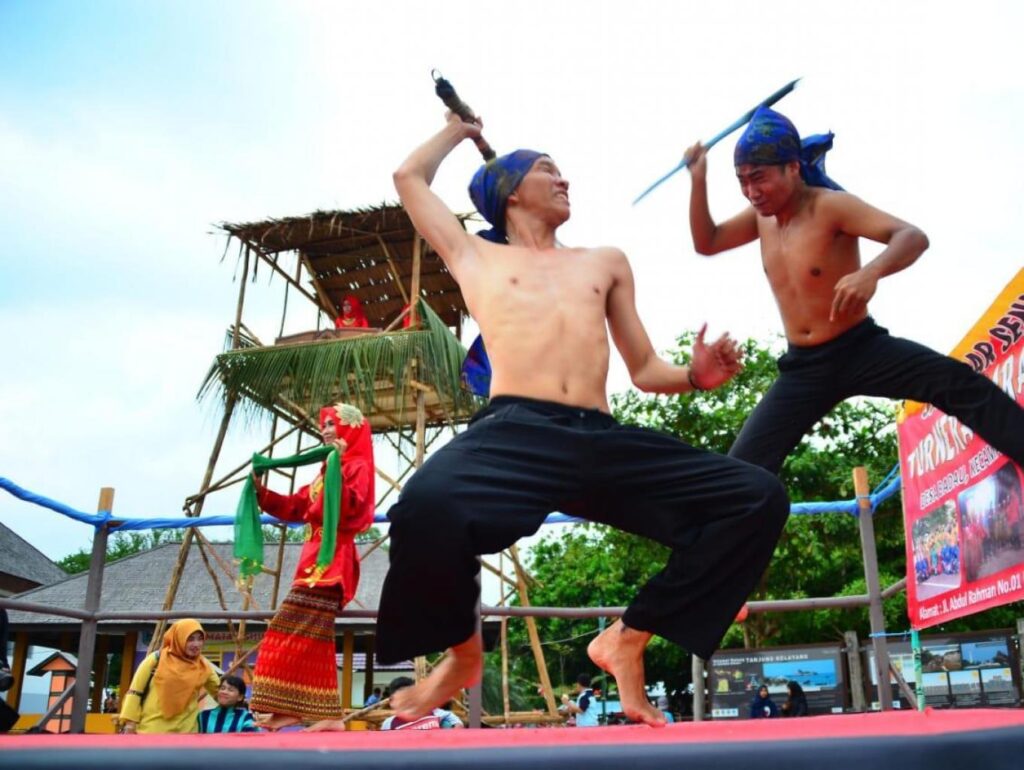
A Duel Born of Myth and Manhood
As a traveler seeking Indonesia hidden gems, you know that the best stories are written in blood and sweat, not brochures. Beripat Beregong is exactly that kind of story.
The ritual isn’t a performance; it’s a centuries-old tradition rooted in the Malay heritage of Belitong. Born in the ancient villages surrounding what is now the UNESCO Global Geopark, the legend tells of a time when the most beautiful girl in the village had too many suitors. The local elders, fearing division among the young men, devised a test. They didn’t ask the suitors to write poetry or offer gold. They asked them to show their courage, agility, and sportsmanship.
They asked them to ripat (whip/strike) each other with rattan.
The original purpose was to choose a husband, yes, but more importantly, it was to prevent revenge and strengthen the social ties between neighboring villages. In Beripat Beregong, you don’t fight to destroy your opponent; you fight to test yourself and honor the community.
The Hypnotic Rhythm of the Beregong
To understand Beripat Beregong, you must understand the “Beregong.” Before any rattan is touched, the arena (traditionally a raised wooden stilt house or platform) is dominated by the musicians.
Imagine a towering Balai Peregongan—a bamboo house built 6-7 meters high. This is where the instruments are placed. The sound is massive. It’s a primal orchestra of gongs (gong, kelinang, tawak-tawak), drums (gendang), and a mesmerizing traditional trumpet known as serunai. This music doesn’t just accompany the fight; it dictates its pace. It’s the heartbeat of the event, building in intensity until the air itself seems to vibrate.
It is special interest tourism Indonesia at its most immersive. You don’t just watch this cultural experience; you feel it in your bones.
The Clash of Rattan: A Test of Agility and Spirit
When the Beregong music reaches its peak, the atmosphere is electric. Two fighters, men from different villages (an essential rule to prevent revenge and foster wider community social ties), enter the arena.
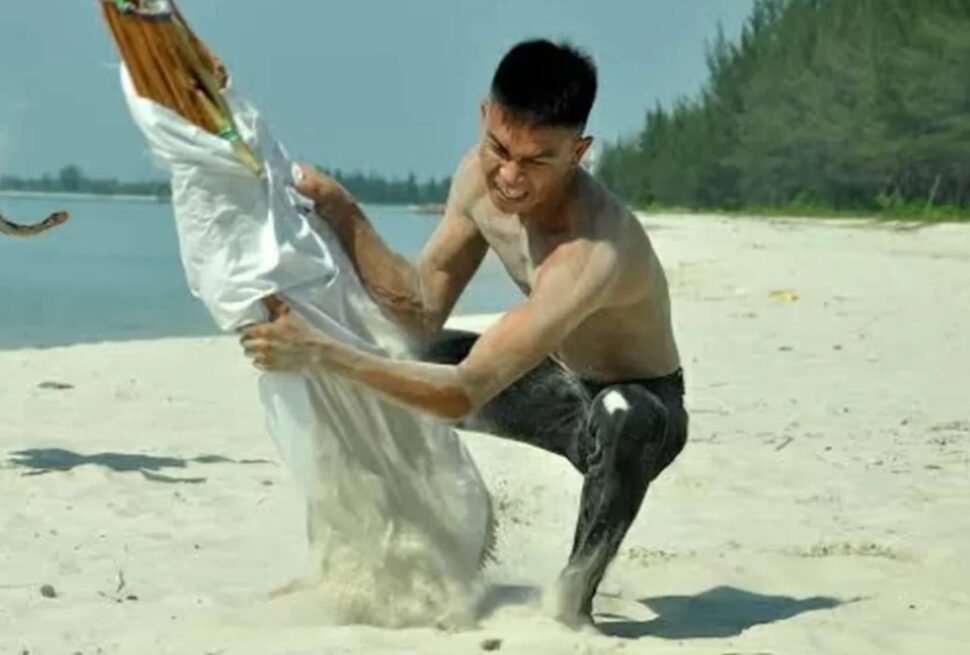
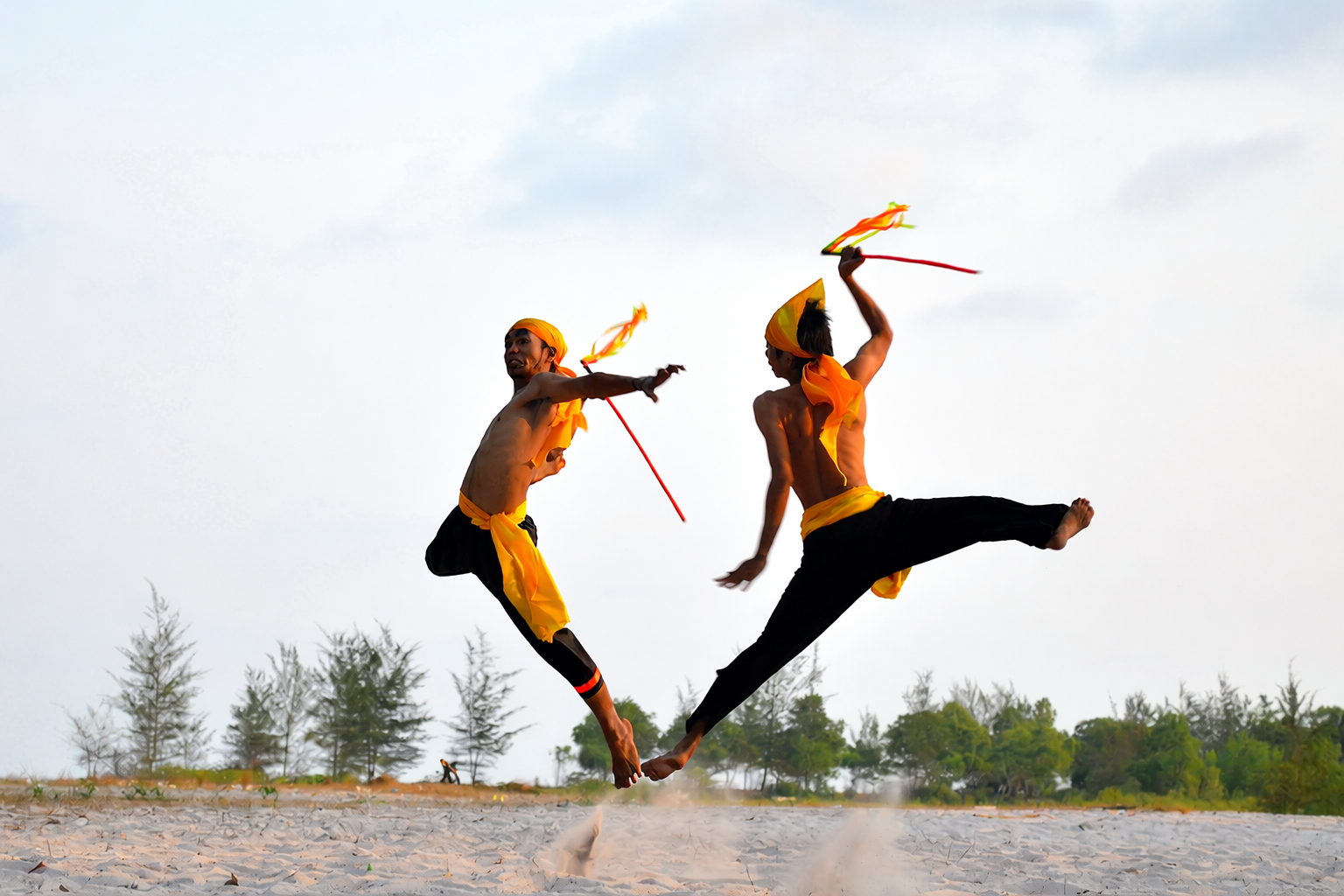
They are shirtless, exposing their backs to the crowd and to their opponents. Around their heads, they wear a traditional kebat (cloth headband). Their only defenses are a cloth wrap on their left arm, which they use to deflect strikes, and their own reflexes. In their right hand, they hold the ripat—a 1.30-meter length of flexible rattan.
Before the match starts, the Dukun (village shaman), who acts as the supreme referee and spiritual guide, inspects the rattans and asks the fighters where they come from. He blesses them with sacred water, which is said to keep the pain at bay. This spiritual element is a core part of what makes cultural experiences within the Belitung Geopark so profound. It’s a bridge between the physical and spiritual worlds.
The duel begins. It’s a blur of dynamic movement. They dance, they spin, they serenade the crowd with war cries (ngigal). They aren’t allowed to strike vital areas like the head or waist down; only the back is a fair target. The winner is the one who suffers the fewest strikes to their back.
The first crack of rattan is shocking. It leaves a large, scarlet welt. Yet, the fighters continue, driven by the music, the roar of the crowd, and a desire to display their jantanan—their manhood. They may wince, they may even fall, but they always rise, smiling. The duel isn’t about victory; it’s about courage and resilience.
brotherhood Over Blood: The Deeper Meaning
By the end of the match, both fighters’ backs will bear the bilures and scars of the ripat. In any other sport, this would be a source of resentment. But in Beripat Beregong, something miraculous happens.
As soon as the Dukun declares the match over, the fighters immediately embrace. They help each other wipe the blood and sweat. This is the moment that makes this Belitong Malay tradition unique. The fight, born of strength, ends in brotherhood. The blood shed on the arena floor is seen as a sacrificial offering to secure village harmony.
It is the physical manifestation of preventing revenge and fostering brotherhood, which are the cornerstones of the Belitong culture.
Experiencing Beripat Beregong with MyBelitungTrip
Today, witnessing a Beripat Beregong duel in its traditional setting is rare. It’s a logistically challenging event, requiring the construction of the Balai Peregongan and the presence of the Dukun and traditional musicians.
Typically, it is only performed during major annual cultural festivals like the Maras Taun (harvest thanksgiving) ceremony. However, at MyBelitungTrip, we are committed to showcasing the Authentic Indonesia you thought was lost. Through our deep roots in the Belitong community, we work with local Sanggar (cultural arts centers) to arrange special interest tourism Indonesia experiences. We can help integrate this powerful event into a broader cultural Belitong heritage itinerary.
Imagine this: a morning spent island-hopping among the ancient granite giants of the UNESCO Global Geopark, and an evening spent under the stars, feeling the primal rhythm of the Beregong and witnessing a centuries-old test of human spirit.
If you are a traveler who wants meaning, authenticity, and a connection to something ancient, you have found your home. Contact MyBelitungTrip today. Let us take you beyond the boulders to meet the living, breathing soul of Belitong.***